
Why Managers Struggle with Execution: The Hidden Skills That Drive Follow-Through
Most managers aren’t struggling because they don’t know what to do. They’re struggling because they don’t have the systems to do it consistently.
In high-growth organizations, managers are expected to juggle competing priorities, lead teams, deliver results, communicate clearly, and adapt to constant change. On paper, the expectations are clear. In practice, execution becomes inconsistent. I see the cost of that gap show up everywhere: missed deadlines, frustrated teams, capable managers who quietly start to question whether they're cut out for the job.
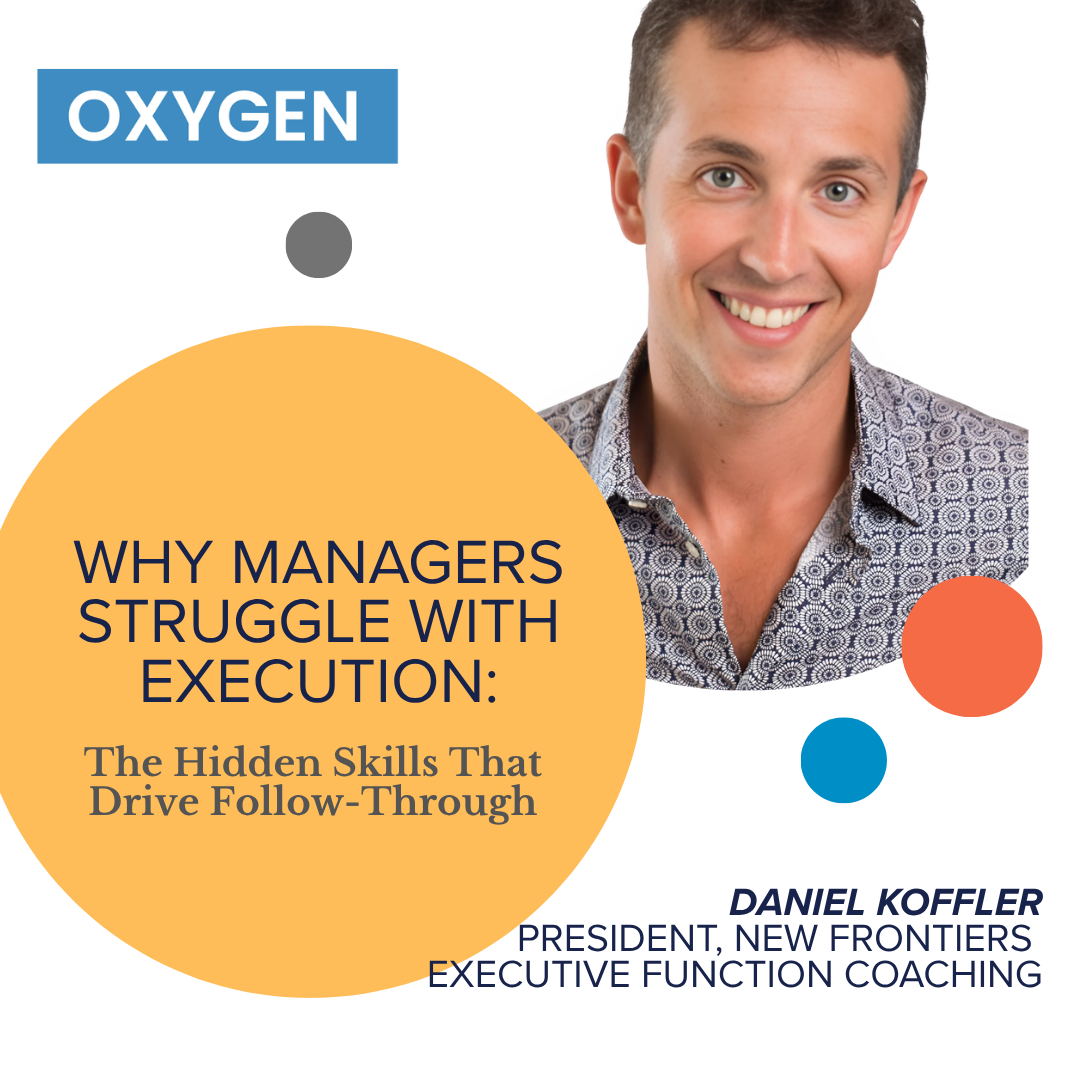
So I sat down with Daniel Koffler, President of New Frontiers Executive Function Coaching, one of the nation’s leading organizations specializing in executive function coaching for adults and professional teams. Executive functions are the cognitive skills that support planning, prioritization, task initiation, sustained effort, and follow-through. Through tens of thousands of hours supporting individuals and organizations, New Frontiers focuses on strengthening these core systems so that strategy can actually translate into consistent performance.
The Execution Gap Starts at the Cognitive Level
Ashley: A lot of organizations have strong strategies but still struggle with execution. What do you see as the root cause?
Daniel: What stands out most is that execution breakdowns are rarely about intelligence or effort. Most managers understand what’s expected of them. The challenge is capacity.
At the core of that capacity are executive functions. These are the mental processes that allow someone to plan ahead, prioritize effectively, initiate tasks, and follow through over time. When those systems are overloaded, execution becomes inconsistent.
Managers are constantly switching between priorities, responding to immediate issues, and trying to keep long-term goals in focus. When executive function is stretched across too many competing demands, even clear strategies become difficult to execute reliably.
Why More Oversight Doesn’t Solve an Executive Function Problem
Ashley: When execution slips, organizations often respond by adding more oversight. Does that help?
Daniel: It often treats the symptom rather than the cause.
If the issue is that managers are struggling with prioritization, organization, or follow-through, adding more meetings or check-ins actually increases the cognitive load on those same executive functions. It gives the appearance of structure, but it doesn’t strengthen the underlying system.
What’s more effective is designing workflows that support executive function. That means making priorities visible, reducing ambiguity, and clarifying ownership so managers don’t have to rely on memory or constant decision-making.
From Reactive to Proactive Requires Stronger Executive Function
Ashley: A lot of the managers I work with feel stuck in reactive mode. How do they shift out of that?
Daniel: Reactivity is often a sign that executive function systems around planning and prioritization aren’t holding.
When managers don’t have a consistent way to organize their responsibilities or map out their week, they default to responding to whatever is most immediate. Over time, that erodes their ability to think ahead.
Strengthening executive function doesn’t mean adding complexity. It means building simple, repeatable systems that support planning. When those systems are in place, managers can shift from reacting to directing their time and attention more intentionally.
Cognitive Load, Executive Function, and Burnout
Ashley: Burnout is one of the things I hear about most from managers right now. How does executive function tie into that?
Daniel: Executive function plays a significant role in how sustainable someone’s workload feels.
Burnout often stems from constant mental fragmentation. When someone is holding too many priorities in their head, switching contexts frequently, and lacking clear systems, it creates ongoing strain on executive function.
Over time, that strain becomes exhausting. It’s not just about how much work someone is doing, but how their brain is being asked to manage that work.
When organizations support executive function by creating clearer systems and reducing unnecessary decision-making, managers can operate with more stability and less stress.
What High-Performing Managers Do Differently
Ashley: What do the strongest managers you work with do differently when it comes to execution?
Daniel: They build systems that support their executive function rather than relying on it.
They externalize priorities instead of holding them mentally. They create consistent routines for planning and follow-through. They clarify expectations for themselves and their teams.
Most importantly, they recognize that executive function is not unlimited. They design their workflows to reduce strain on those systems, which allows them to maintain consistency over time.
A Final Thought for Leaders
Ashley: If you could leave organizations with one takeaway, what would it be?
Daniel: If execution is inconsistent, it’s worth looking at executive function before assuming it’s a motivation issue.
When organizations support the cognitive systems that drive planning, prioritization, and follow-through, performance becomes more reliable. Managers feel more in control, and teams operate with greater clarity.
Execution improves not because people are trying harder, but because they’re supported more effectively.
Where Leadership Development Meets Executive Function
At Oxygen, the focus is on building managers who can lead with clarity, confidence, and consistency. At New Frontiers, the focus is on strengthening the executive function systems that make that level of performance possible.
Together, they reflect a shared reality: strong leadership depends not just on strategy, but on the cognitive capacity to execute it consistently.