How MrQ Turned Internally Promoted Managers Into Confident, Accountable Leaders
When a bootstrapped company scales from 80 to 180+ employees, promoting from within is a strength. Until your best performers don't have the tools to manage. Here's how MrQ built a layered development program that created measurable, lasting behavior change.
Key Takeaways
MrQ scaled rapidly from ~80 to 180+ employees while maintaining a strong promote-from-within culture, but that growth exposed critical gaps in manager capability around accountability, delegation, and performance conversations.
A single training program wasn't enough. MrQ partnered with Oxygen to design a three-phase approach: foundational manager training, internal enablement, and sustained coaching with Growth Groups.
The results were significant: "Excellent" ratings for delegation jumped from four percent to twenty-two percent, constructive feedback went from zero percent to twenty-two percent, and difficult conversations moved from zero percent to nearly seventeen percent.
The combination of Management Essentials, Growth Groups, and 1:1 coaching created the conditions for real behavior change. Not just awareness, but consistent daily practice.
The Problem With Promoting Great Performers Into Management Roles
MrQ is a fast-growing, bootstrapped company with the kind of culture most organizations envy. People want to stay. They want to grow. And when management roles opened up, MrQ did what a lot of high-growth companies do: they promoted their best people from within.
That's a good instinct. But it comes with a catch.
The people stepping into management roles had never been trained to manage. They cared deeply about the business and their teams, but they didn't have consistent tools for creating accountability, delegating effectively, running performance conversations, or navigating difficult feedback.
Claudia Farrugia, MrQ's Head of Operations, described the challenge clearly: "We were dealing with people who cared deeply about the business, but didn't have the tools to create accountability consistently."
The symptoms showed up in leadership meetings over and over again. Projects stalled without clear ownership. Performance issues lingered. And senior leaders found themselves getting pulled into tactical problems that should have been handled at the manager level.
This is a pattern that plays out across industries. According to Gartner, eighty-five percent of new people managers receive no formal training before stepping into their roles. The result is a compounding problem: undertrained managers create more work for the leaders above them, and the organization's ability to scale gets bottlenecked in the middle.
Why One-Off Training Doesn't Create Lasting Change
MrQ's leadership understood that the gap wasn't about effort or intention. Their managers were motivated. The issue was that they had never been given the frameworks, practice, or reinforcement needed to turn good instincts into consistent management behaviors.
This is an important distinction. A lot of organizations try to solve management capability gaps with a single workshop or a one-time training event. People leave those sessions feeling energized, but without ongoing practice and support, the new skills rarely stick. Behavior change doesn't happen in a classroom. It happens through repeated application in real situations, with feedback and accountability built in.
MrQ needed something more sustained. They needed an approach that would build foundational skills, reinforce them in the context of MrQ's own culture, and then provide the kind of ongoing coaching and peer support that turns knowledge into habit.
A Three-Phase Approach: Training, Enablement, and Coaching
Oxygen designed a layered development journey for MrQ's managers, structured in three distinct phases, each building on the last.
Phase 1: Management Essentials, Building the Foundation
The starting point was Oxygen's cohort-based manager training program, Management Essentials. This phase focused on giving managers practical, immediately applicable tools across the competencies where MrQ had identified the biggest gaps: delegation, role clarity, feedback, performance conversations, accountability, and meeting effectiveness.
The emphasis was on simplicity and real-world application. As Farrugia put it: "The role-playing and real examples made it practical. It wasn't theoretical. It was immediately usable."
Management Essentials gave MrQ's managers a shared language and a baseline of confidence. But the real power of the program was in what came next.
Phase 2: Internal Enablement, Embedding Skills Into MrQ's Culture
Following Management Essentials, MrQ ran a three-month internal program that adapted the foundational content to their specific organizational context: their values, their workflows, their team dynamics.
This phase was about alignment. It recognized that behavior change doesn't come from instruction alone. Managers needed to see how these tools applied to the specific situations they were navigating at MrQ, not just in theory.
Phase 3: Coaching and Growth Groups, The Accelerator
The third phase was a six-month engagement combining two forms of sustained support.
Senior leaders received1:1 private coaching, giving them space for candid reflection, personalized problem-solving, and working through the kinds of complex situations that come with leading a growing company.
People managers participated in Growth Groups: peer-based group coaching sessions where they reinforced what they'd learned, discussed real challenges, and normalized the difficulty of managing people well. Growth Groups created a network of peers all working through similar problems in real time, which accelerated the learning curve significantly.
This layered approach (training, then enablement, then sustained coaching) is what made the difference.
The Results: Measurable Shifts in Manager Capability
The impact showed up in the data. MrQ measured manager competency ratings before and after the program, and the shifts were substantial.
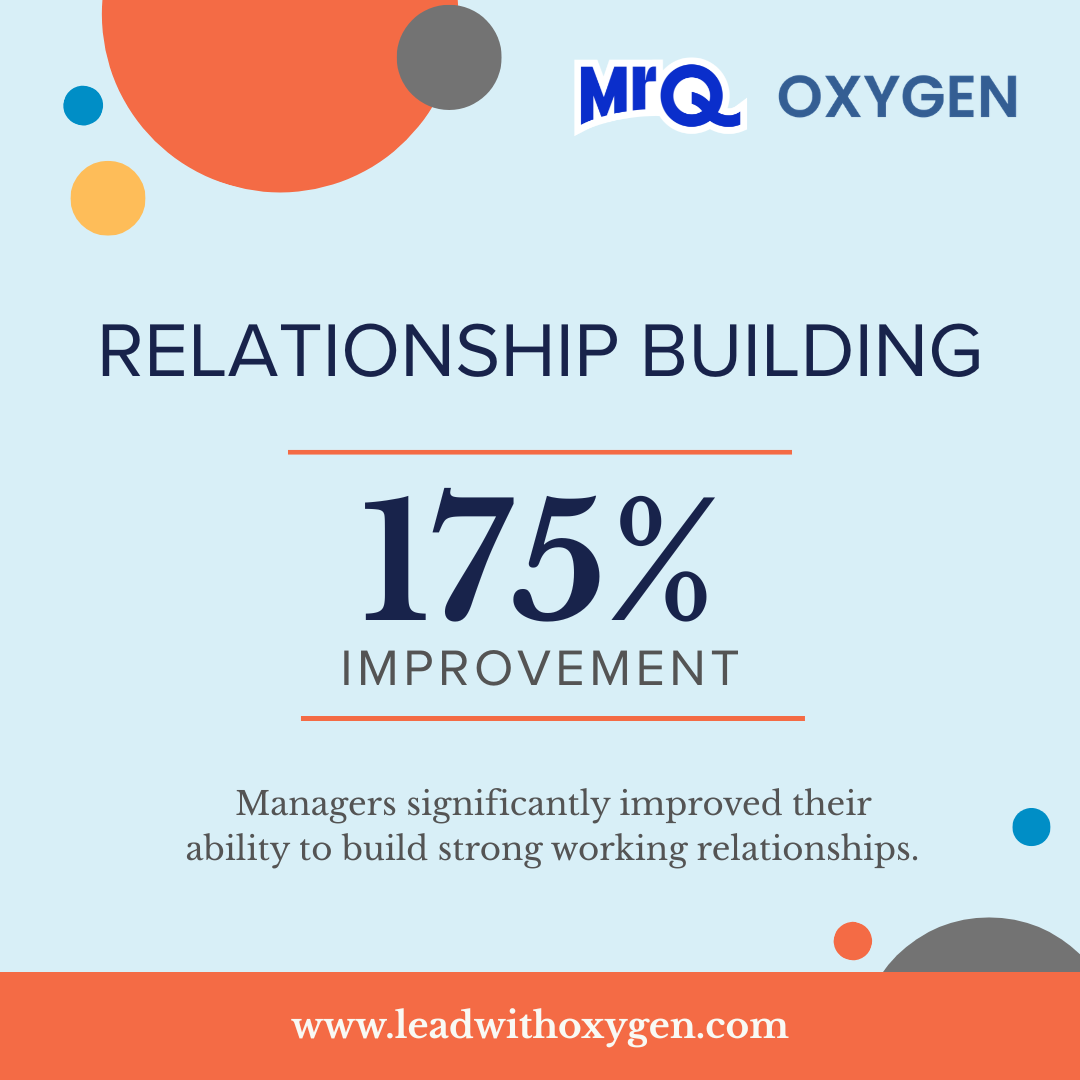
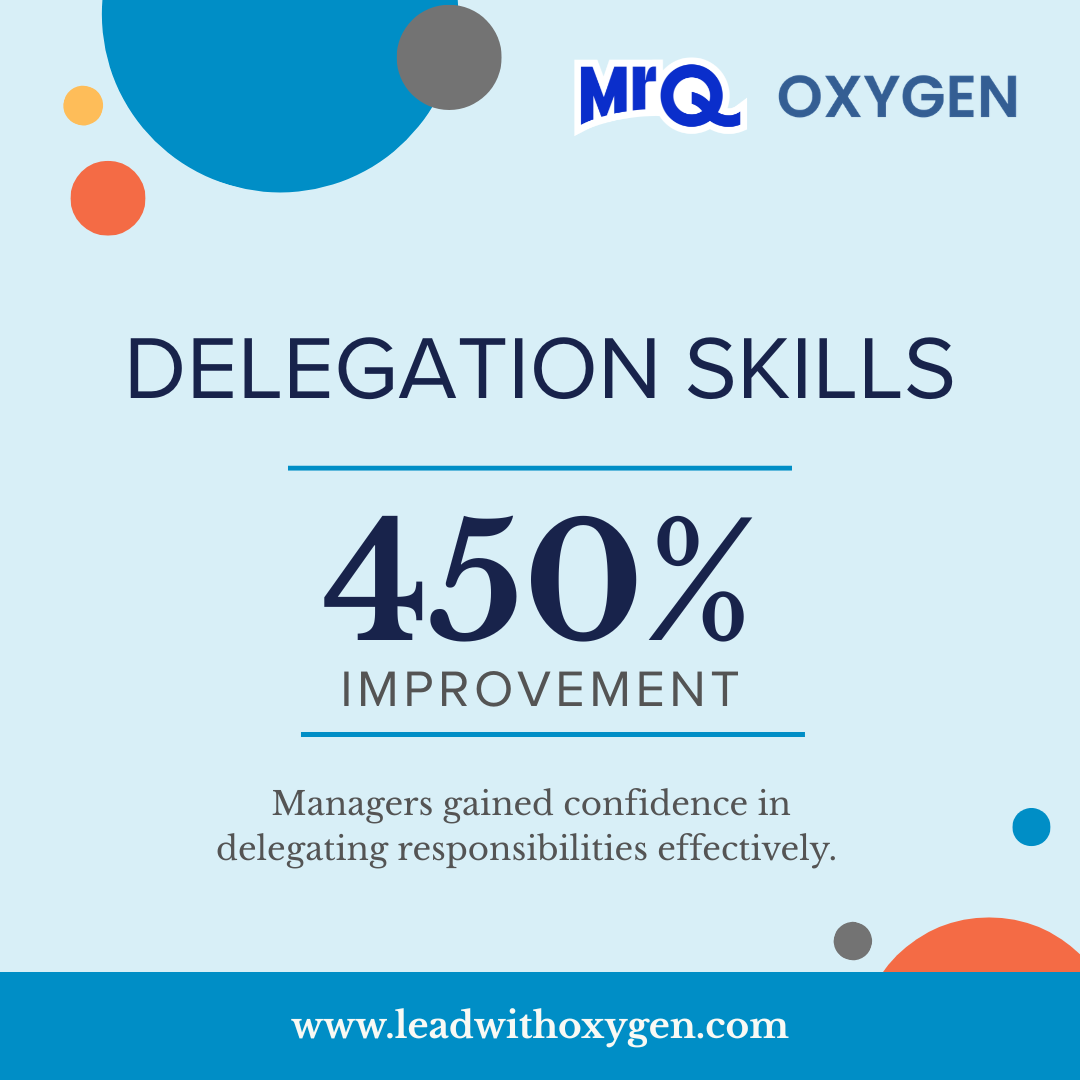
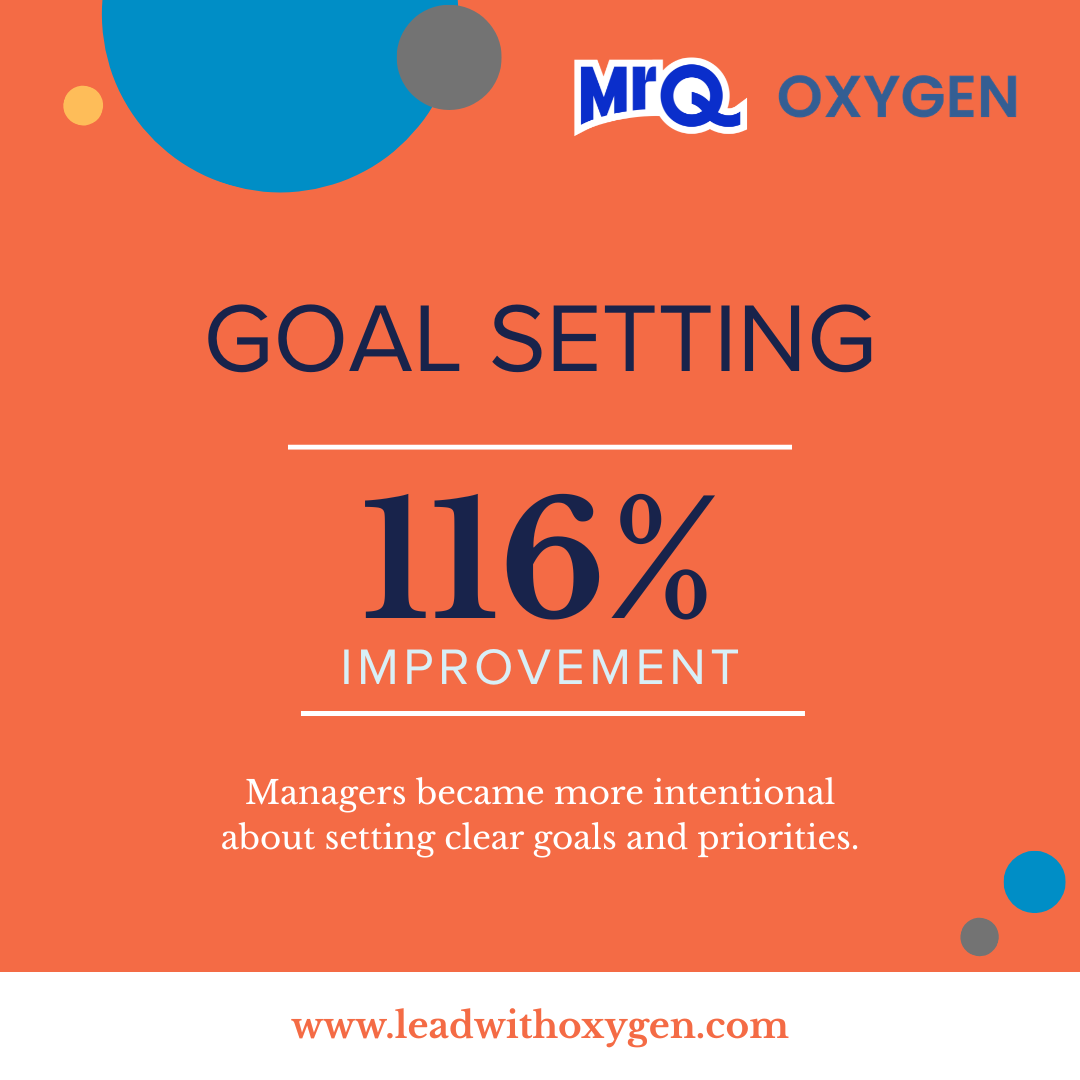
Delegation ratings at the "Excellent" level jumped from four percent to twenty-two percent. Constructive feedback, a competency where zero percent of managers had been rated "Excellent" before, moved to twenty-two percent. Goal setting at the "Good/Very Good" level improved from thirty-six percent to nearly seventy-eight percent. And difficult conversations, another area where the starting point was zero percent "Excellent," reached nearly seventeen percent.
Beyond the numbers, senior leaders at MrQ described a qualitative shift in how managers were showing up. Managers were taking greater ownership of delegation and goal clarity. Conversations about priorities and performance became more intentional. And managers started adopting a more strategic posture, stepping out of the weeds of daily operations and into the role their teams actually needed them to play.
As one senior leader at MrQ observed: "I have seen them step into more of a strategic role, rather than staying in the weeds of operations."
Why Layered Development Works Better Than Standalone Training
MrQ's results reinforce something Oxygen sees consistently across its work with high-growth companies: training alone creates understanding, but it doesn't reliably create behavior change. It's the combination of foundational learning, peer reinforcement, and individualized coaching that turns new skills into lasting habits.
Management Essentials provided the framework. Growth Groups gave managers a space to practice, get feedback, and learn from peers navigating similar challenges. 1:1 coaching gave senior leaders the depth and personalization needed to work through their specific situations.
Each layer served a different function, and the compounding effect was what drove the results.
For organizations thinking about investing in manager development, the MrQ case study is a useful reference point. The question isn't just "what training should we provide?" It's "how do we create the conditions for our managers to actually change their behavior, consistently, over time?"
That's the harder problem. And it's the one that a layered approach is built to solve.
Read the full MrQ case study for more detail on the program structure and results.
Interested in building a manager development program for your organization? Learn more about Management Essentials or schedule a discovery call.